The field of optometry is devoted to the study and identification of abnormalities and defects in the eye. It is particularly concerned with detecting and correcting refractive errors that cause vision problems. In the past, this was accomplished almost exclusively with corrective lenses such as glasses or contacts. However, it is now increasingly common to correct refractive errors permanently through surgical means.
Refractive errors are often due to structures located in the front of the eye having difficulties properly focusing light onto the back of the eye. The cornea has a lot to do with the eyes' ability to focus light. It is the dome-shaped structure that covers the iris and pupil and is responsible for two-thirds of the eye's refractive power.
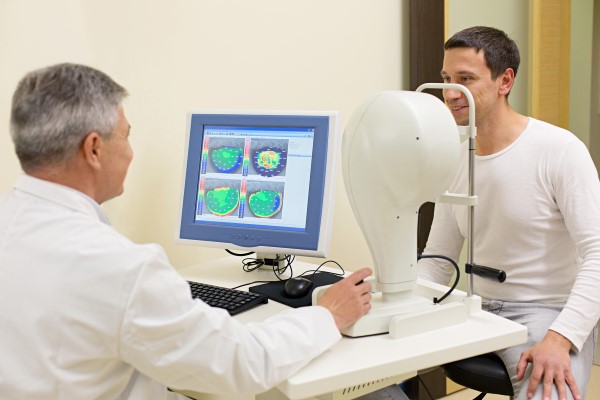
The purpose of pachymetry is to measure the thickness of the cornea. This is important when planning a surgical procedure to correct a refractive error. It can determine whether the patient is a candidate for optometry surgery and tells the doctor how much of the cornea to remove.
Methods of pachymetry
There are two methods of measuring the thickness of the cornea through pachymetry. Optical pachymetry is the newer type. It allows the optometrist to measure the cornea microscopically to determine the thickness. It does not require the instrument to come in contact with the cornea itself. However, the downside of optical pachymetry is that insurance companies may not pay for it.
Ultrasound pachymetry is the more traditional method. It involves the use of a sensor that comes in direct contact with the cornea. However, this does not cause any pain. The assessment involves sending ultrasonic waves into the eye and measuring when and how they reflect back. These measurements indicate the thickness of the cornea.
An ultrasound pachymetry device is portable and cost-effective. However, the measurements are only usable if the device is positioned perfectly on the eye.
Reasons for pachymetry
Refractive surgical procedures, such as LASIK, require an eye doctor to remove a portion of the cornea to change the way it focuses light on the retina in the back of the eye. It is important to determine the cornea's thickness beforehand. If it is too thin at baseline, removing a portion may result in permanent vision damage; therefore, the patient would not be a candidate for surgery. Pachymetry is also a necessary part of the surgical planning process for patients who are candidates. However, there are other reasons why pachymetry is performed.
Glaucoma testing
Glaucoma is a disease that causes increased pressure in the eye. Corneal thickness is an independent indicator of glaucoma risk, and the thickness of the cornea may affect readings of intraocular pressure. Therefore, it is increasingly common for glaucoma testing to include pachymetry.
Corneal swelling
The cornea can swell due to excess fluid. This occurs for a number of reasons. Some people experience swollen corneas due to wearing contact lenses. There are also diseases that can cause corneal swelling, including Fuchs' Dystrophy. Pachymetry can show an increase in thickness even when examination with a microscope cannot.
Conclusion
Measuring the thickness of the cornea during an optometry exam is important for several different reasons. Pachymetry offers multiple options by which to accomplish it.
Request an appointment here: https://www.texasoptical.net or call Texas Optical at (214) 771-7333 for an appointment in our Dallas office.
Check out what others are saying about our services on Yelp: Read our Yelp reviews.
Recent Posts
A contact lens exam addresses different questions than a standard eye exam. It evaluates the cornea, lids, and tear film, then matches lens materials and designs to vision needs and eye health. Lenses sit directly on the eye, so small details such as curvature, diameter, and oxygen flow influence comfort, clarity, and safety. An optometrist…
Standard vision tests, or eye exams, help ensure accurate prescriptions for glasses and support long-term eye health for people who wear corrective lenses. Even small prescription changes can affect headaches, screen comfort, and night driving clarity. Eye exams also screen for conditions that may not present with early symptoms, making routine testing an important habit.…
Pediatric eye care is the key to clear vision and confident learning that starts in childhood. Unfortunately, even minor vision problems can negatively affect reading, coordination, and classroom focus. Many parents come to realize how common it is for children to pass quick screenings yet struggle with focusing, eye strain, or fatigue during schoolwork. A…
The selection of eyewear feels significantly easier when the styles and craftsmanship of Versace eyewear enters the conversation, since bold lines and iconic detailing create an instantly recognizable look. Versace represents the intersection of Italian fashion and Greek mythos, blending confident glamour with symbolism through its signature Medusa logo. The brand is widely associated with…