What Are the Different Types of Contact Lenses?
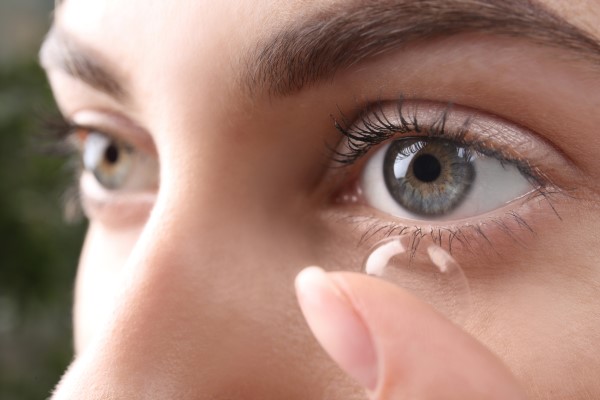
Contact lenses are a great choice for people who need vision correction but would rather avoid having to deal with wearing glasses full-time or LASIK surgery. These lenses go directly on the eye and they have evolved a lot in the past few decades.
Adaptive contact lenses that protect your eyes against sunlight now exist along with extended wear contacts that can stay in for months.
Figuring out the best type of contact lenses
One of the most important things to do when shopping for contact lenses is to consider the materials that the different types of lenses are made with. There are five main types of contact lenses, these are:
- Soft lenses: These contact lenses are made from gel-like plastics that contain water called hydrogels. These are very thin lenses that conform to the front surface of the wearer’s eyes. They are responsible for the popularity of contact lenses thanks to how comfortable they are from the time they’re inserted
- Silicone hydrogel lenses: These are a more porous type of soft contact lenses that allow more oxygen to reach the cornea when worn. This allows the wearer to use the lenses for significantly longer periods
- Gas permeable lenses: These are hard contact lenses that are very similar to Polymethyl methacrylate (PMMA) lenses, but they allow more oxygen to get to the cornea. They also fit better than conventional hard lenses and they tend to lead to sharper vision than soft contact lenses, especially for those dealing with astigmatism. It takes a few weeks to get used to wearing GP lenses, but they eventually become as comfortable as GP lenses
- Hybrid contact lenses: Hybrid lenses can be as comfortable as soft contact lenses and they provide the sharp vision associated with gas permeable lenses. Hybrid contact lenses have a rigid glass permeable center that is surrounded by hydrogel material. While these type of lenses provide the best features of soft and hard contact lenses, they are more expensive than soft lenses and they can be more challenging to insert or remove
- (PMMA): PMMA contact lenses are made from a rigid, transparent material and provide excellent optics. However, these lenses restrict the flow of oxygen to the eye and they can be quite uncomfortable when starting. This type of contact lenses was the first type but gas permeable lenses are typically preferred over them nowadays
We have the right type of lenses for you
Studies show that silicone hydrogel lenses are the most popular in the U.S. with 64% of those who wear contact lenses choosing them, followed by soft hydrogen lenses at 22%, and gas permeable lenses at 11%.
If you have ever worn all three types of lenses, these numbers may not be surprising. Gas permeable lenses get you sharper vision, but the discomfort that comes with wearing them negates this benefit. Soft contact lenses adequately correct vision, and it is easy to forget you have them in.
Call or visit our Dallas clinic to learn more about the different types of contact lenses.
Here’s how to reach us…
Request an appointment here: https://www.texasoptical.net or call Texas Optical at (214) 771-7333 for an appointment in our Dallas office.
Check out what others are saying about our services on Yelp: Contact Lenses in Dallas, TX.
Recent Posts
A contact lens exam addresses different questions than a standard eye exam. It evaluates the cornea, lids, and tear film, then matches lens materials and designs to vision needs and eye health. Lenses sit directly on the eye, so small details such as curvature, diameter, and oxygen flow influence comfort, clarity, and safety. An optometrist…
Standard vision tests, or eye exams, help ensure accurate prescriptions for glasses and support long-term eye health for people who wear corrective lenses. Even small prescription changes can affect headaches, screen comfort, and night driving clarity. Eye exams also screen for conditions that may not present with early symptoms, making routine testing an important habit.…
Pediatric eye care is the key to clear vision and confident learning that starts in childhood. Unfortunately, even minor vision problems can negatively affect reading, coordination, and classroom focus. Many parents come to realize how common it is for children to pass quick screenings yet struggle with focusing, eye strain, or fatigue during schoolwork. A…
The selection of eyewear feels significantly easier when the styles and craftsmanship of Versace eyewear enters the conversation, since bold lines and iconic detailing create an instantly recognizable look. Versace represents the intersection of Italian fashion and Greek mythos, blending confident glamour with symbolism through its signature Medusa logo. The brand is widely associated with…