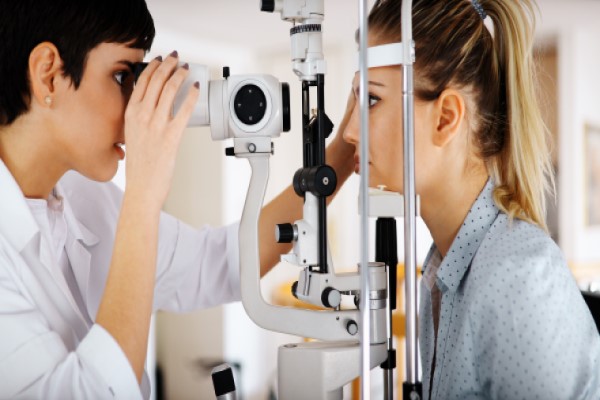
An optometry exam involves a thorough evaluation of the eyes to check for any signs of ocular disease and assess any vision changes. Treatment for eye diseases can be more effective if the symptoms are caught early, and correcting vision changes with glasses or contact lenses can improve safety and quality of life. Therefore, it is important to have eye exams on a regular basis.
Patients may not know what to expect if they have not had an eye exam lately. The following is an overview of what may happen during an optometry exam. All tests are not performed at every visit, but people can expect to have most or all of these tests performed over the course of a lifetime.
Having a thorough understanding of what to expect can be helpful later on when the appointment is approaching. Continue reading to find out more.
Normal results
A normal eye exam shows no evidence of any disease, such as macular degeneration, cataracts, or glaucoma. An eye doctor will check that the external structures of the eye, such as the sclera (white part) and iris (colored part) appear normal. The ability to distinguish between various colors is a normal result. An eye exam may include a test of the peripheral vision to assess if the patient can see things off to the side.
One of the most important assessments during an eye exam is visual acuity, i.e., how sharp or clear objects appear. Nearsightedness occurs when people are able to clearly see items that are close up but have difficulty seeing objects that are far away. On the other hand, farsightedness allows people to see things at a distance, but objects that are nearer may appear blurry. Corrective lenses, such as glasses or contacts, are often used to compensate for abnormal visual acuity.
Common tests
Two types of tests are typically performed at an optometry visit. There are tests to assess for disease and tests to gauge vision.
Tests to assess for disease
A glaucoma test involves measuring the pressure inside the eye by blowing a puff of air onto it. A device called a tonometer then assesses the eye's resistance to the puff of air. Elevated pressure is a symptom that may indicate glaucoma is present.
A slit lamp exam allows the eye doctor to magnify the structures of the eye to look for abnormalities that may only be present on the microscopic level. It allows the eye doctor to perform a thorough examination of the structures at the front and back of the eye. This is necessary in order to catch any red flags or warning signs that may indicate any existing problems.
In the event that there are warning signs present, the optometrist will then take the necessary steps to confirm what condition is present. From there, the appropriate action plan will be put into place so that treatment can begin right away.
Tests to gauge vision
A visual acuity test involves identifying letters that become smaller to represent objects at a greater distance. If visual acuity is not normal, the eye doctor may perform refraction and retinoscopy tests. These require the patient to look through a device called a phoropter that is equipped with different lenses. The doctor switches to different lenses to determine which ones help the patient see better. This part of a vision test is quite common and typically starts at a young age as it is simple.
A visual field test gauges peripheral vision. It involves trying to perceive flashes of light around the face while looking straight ahead. A color blindness test involves a pattern of colored dots, which allows the individual to confirm what colors are present. People who can distinguish colors will perceive certain shapes within the patterns. This is a positive result, which means that there is nothing to worry about.
What to know
Many eye conditions are degenerative, meaning that the associated problems get worse over time. Therefore, it may be necessary to have optometry exams more often as you get older.
When curious about optometry appointments and what else to expect, it can be helpful to reach out directly. Any unanswered questions or concerns can be addressed by the optometrist. And if you need help getting the right contacts, eyeglasses, or referrals to a surgeon to improve your vision, an optometrist can help. To learn more or to get scheduled for an appointment, reach out today.
Are you considering optometry in the Dallas area? Get more information at https://www.texasoptical.net.
Check out what others are saying about our services on Yelp: Read our Yelp reviews.
Recent Posts
Protecting vision in hazardous environments requires the use of specialized safety glasses to prevent injuries from flying debris, chemicals, or intense light. We offer a range of protective eyewear to ensure patients in Dallas maintain clear, safe vision across various environments. Whether working on a construction site or engaging in home improvement projects, selecting the…
Progressive lenses make it possible to see clearly at multiple distances without switching between pairs of glasses throughout the day. These lenses combine distance, intermediate, and near vision correction into one smooth design. An optometrist may recommend them when a patient needs glasses for reading, computer work, and driving all at the same time. Learning…
Seeking professional red eye treatment addresses the root cause of ocular irritation rather than merely masking symptoms with temporary, over-the-counter (OTC) solutions. While many people view a bloodshot appearance as a minor nuisance, redness in the eyes is often a primary signal of underlying health concerns. These issues range from simple environmental allergies to more…
Maintaining healthy eyes is an essential part of overall wellness. Therefore, scheduling regular optometry visits is an important step toward preserving clear, comfortable vision. These appointments do far more than determine whether a person needs glasses or contact lenses. They help assess both visual performance and the health of the internal and external eye structures.…