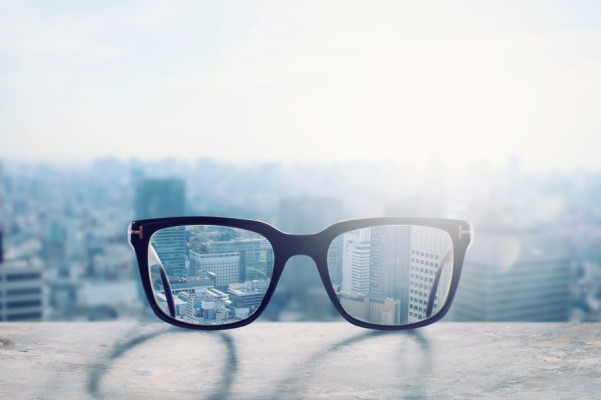
Visiting an optometrist for corrective lenses is vital if someone has poor eyesight. People who purchase cheap pairs of reading glasses in stores may not realize that these are not going to truly help them see more clearly. In fact, wearing glasses that do not have the corrective lens a person needs can damage their eyesight further. Corrective lenses are customized visual aids designed to enhance the weaker aspects of an individual's eyesight.
Corrective lenses address refractive problems such as nearsightedness, farsightedness, presbyopia, and astigmatism. Glasses or prescription eyewear rest on the bridge of the nose a short distance from the eyes. If you are interested in learning more about corrective lenses or want to enhance your vision, give us a call today.
How corrective lenses work
According to the World Health Organization, there are about 253 million people around the globe with some form of vision impairment. Most have preventable and treatable conditions. One of the most effective ways to improve a person's vision is by using prescription lenses.
Even people with 20/20 vision may benefit from wearing corrective lenses. Eyewear can block the blue light from electronic devices, which can lead to eye strain when staring at a screen for long periods of time. A person can develop vision problems when light enters the eyes and does not focus on the proper location in the retina.
The light might shoot too far back in the retina, as is the case with farsightedness. In other cases, the light might be too far in front of the retina, leading to nearsightedness. A person might also have a vision problem if they have a cornea with an abnormal shape. The abnormal shape prevents light from properly focusing on the retina.
A corrective lens has a unique curvature, which is the prescription the optometrist provides for the patient. The curvature focuses the light entering the eyes on the proper part of the retina, leading to clearer vision.
The different types of corrective lenses
There are two main types of corrective lenses: convex and concave. These are also called plus and minus lenses, respectively. A third option is known as compound lenses, which is a combination of both. Our team will take the time to examine the patient and determine which option will work best for their needs.
1. Convex lenses
The surface of a convex lens bulges outward. These types of lenses are sometimes known as converging lenses since they bring parallel rays of light together and focus them on a single location known as the focal point.
Convex lenses are typically a component in devices such as telescopes and binoculars. An optometrist may use a convex lens to treat farsightedness.
2. Concave lenses
Concave lenses are the opposite of their convex counterparts. The surface of the lens curves inward, making parallel rays of light diverge from one another. Concave lenses are sometimes called diverging lenses for this reason. These types of lenses help to treat nearsightedness.
3. Compound lenses and more
It is possible to combine concave lenses with convex lenses to create compound lenses.
Other types of lenses include:
- Multifocal lenses
- Adjustable focus
- Trifocals
- Progressive
- Plano
- Single vision
The optometrist will educate the patient about which type of lenses are best for them after their vision has been evaluated with a comprehensive eye exam.
Frequently asked questions about corrective lenses
Think you need corrective lenses? Here are answers to some of the inquiries you might have:
1. What is the difference between an optometrist and an ophthalmologist?
An optometrist is a medical care professional who specializes in eye and vision care. An ophthalmologist is a medical doctor who specializes in the diagnosis, treatment, and prevention of diseases and disorders of the eye.
2. Do I need a prescription for corrective lenses?
Yes, you will need a prescription from an optometrist or ophthalmologist to get corrective lenses.
3. How frequently should I get my eyes checked?
It is generally recommended that you have your eyes checked every two years. However, if you have a family history of eye disease or are at increased risk for developing eye problems, you may need to have your eyes checked more frequently.
4. What are the various types of corrective lenses?
There are two main classes of corrective lenses: glasses and contact lenses. Glasses are worn on the outside of the eye, and contact lenses are worn on the eye's surface. Both types of corrective lenses can correct nearsightedness, farsightedness, and astigmatism.
5. How do I choose the right type of corrective lens for me?
The type of corrective lens that is best for you will depend on your individual needs and preferences. Your optometrist or ophthalmologist can help you choose the best type of lens for you.
We can correct your vision
Call or visit our Dallas clinic to set up an appointment with our optometrist to find out if you need corrective lenses.
Request an appointment here: https://www.texasoptical.net or call Texas Optical at (214) 771-7333 for an appointment in our Dallas office.
Check out what others are saying about our services on Yelp: Read our Yelp reviews.
Recent Posts
Protecting vision in hazardous environments requires the use of specialized safety glasses to prevent injuries from flying debris, chemicals, or intense light. We offer a range of protective eyewear to ensure patients in Dallas maintain clear, safe vision across various environments. Whether working on a construction site or engaging in home improvement projects, selecting the…
Progressive lenses make it possible to see clearly at multiple distances without switching between pairs of glasses throughout the day. These lenses combine distance, intermediate, and near vision correction into one smooth design. An optometrist may recommend them when a patient needs glasses for reading, computer work, and driving all at the same time. Learning…
Seeking professional red eye treatment addresses the root cause of ocular irritation rather than merely masking symptoms with temporary, over-the-counter (OTC) solutions. While many people view a bloodshot appearance as a minor nuisance, redness in the eyes is often a primary signal of underlying health concerns. These issues range from simple environmental allergies to more…
Maintaining healthy eyes is an essential part of overall wellness. Therefore, scheduling regular optometry visits is an important step toward preserving clear, comfortable vision. These appointments do far more than determine whether a person needs glasses or contact lenses. They help assess both visual performance and the health of the internal and external eye structures.…