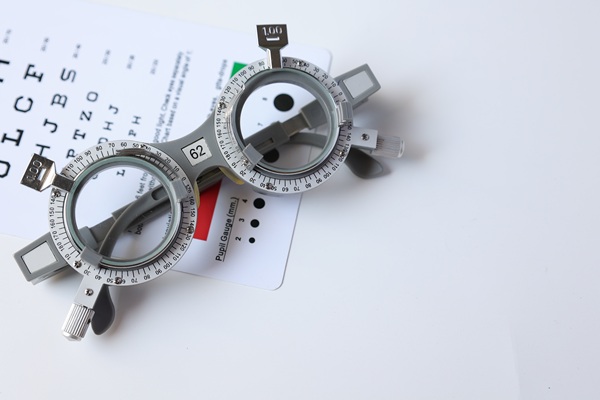
Corrective lenses are the primary method for addressing refractive errors and maintaining sharp vision as you get older. When the ability to focus on fine print or distant objects begins to fade, choosing the right lens can help you maintain your vision clarity and comfort. Among the various options available at an optometry practice, single-vision and bifocal lenses are the most frequently prescribed. Understanding the specific applications of these corrective lenses allows patients to navigate their visual health decisions with total clarity.
The functional mechanics of corrective lenses
The main purpose of corrective lenses is to help light enter the eye correctly. They bend light so it hits the retina properly, fixing issues with eye shape or lens stiffness. At the end of the day, the goal of corrective lenses is to reduce strain and restore clear vision. Modern lens materials are lighter and more durable, making strong prescriptions more comfortable and visually appealing. Their effectiveness depends on choosing the right shape for each person's needs.
Single vision lenses
Single vision lenses have one consistent optical prescription across the entire surface of the lens. These are the most common types of corrective lenses and are used to treat a single field of vision. For individuals with nearsightedness or farsightedness, these lenses offer the simplest and most effective solution.
The main benefit of single-vision lenses is that they do not distort the wearer's vision. These lenses focus on one point, so there is no blurring — or "image jump" — when the wearer looks from the top to the bottom. This makes them ideal for younger people, athletes, or anyone who drives a lot and needs clear vision. Additionally, some single-vision lenses are specifically made for use as "computer glasses." They are designed for intermediate distances to help reduce eye strain while working on screens.
Bifocals
As people age, they may develop a condition called presbyopia, starting around age forty. This condition causes the lens of the eye to lose its flexibility, making it hard to focus on distant views and nearby reading materials. Bifocal lenses help with this issue by combining two different vision strengths into one lens. The upper part of the lens is designed for distance, while the lower part has magnification for reading or detailed work.
Some people worry about the visible line in traditional bifocals. However, they help avoid the hassle of needing multiple pairs of glasses or constantly taking off and putting on frames to see close objects. The distinct sections of bifocals provide a large area for reading, which many find easier than the gradual changes in progressive lenses.
Comparing performance and adaptation
When choosing between these two options, wearers should consider several technical factors to ensure they achieve the best possible outcome. These factors include:
- Prescription complexity: Single-vision lenses address one refractive error, while bifocals combine two prescriptions into a single frame.
- Field of vision: Single vision provides an edge-to-edge uniform experience. Meanwhile, bifocals require the wearer to look through specific zones for specific tasks.
- Adaptation period: Most patients adjust to single-vision frames instantly; however, bifocals require the brain to learn to find the reading segment without looking down too abruptly.
- Visual transitions: Bifocals may cause a momentary "jump" in the image when crossing the segment line, unlike single vision designs.
- Cost and manufacturing: Due to the complexity of grinding two prescriptions into one lens, bifocals typically involve a higher manufacturing cost than standard single vision options.
The selection process is not merely about magnification but about how the eyes move during a typical day. For example, a person who spends eight hours a day driving has different ocular needs than a librarian or a jeweler who performs intricate tasks at close range.
Benefits for specific lifestyles
Single vision lenses are frequently the best option for children and students. Their eyes generally require only one correction, and the wide field of view supports active lifestyles. These lenses are also more compatible with a wider variety of frame styles, including smaller or highly curved frames that might not accommodate a bifocal segment effectively.
In contrast, bifocal lenses offer an unparalleled level of convenience for the multi-tasking professional. If a person must frequently shift focus from a presentation at the front of a room to the notes on a desk, the bifocal allows for seamless transitions without the physical burden of switching frames. This efficiency leads to higher patient satisfaction for those in high-intensity work environments where speed and accuracy are paramount.
Schedule your next appointment at our Dallas office
Choosing the right corrective lenses is an important step in maintaining a high quality of life and ensuring long-term ocular health. Whether your priority is comfortably reading a book or driving at night, the right pair of glasses restores clarity and confidence in your vision. Call our Dallas office to learn more or to schedule your next appointment.
Request an appointment here: https://www.texasoptical.net or call Texas Optical at (214) 771-7333 for an appointment in our Dallas office.
Check out what others are saying about our services on Yelp: Read our Yelp reviews.
Recent Posts
Protecting vision in hazardous environments requires the use of specialized safety glasses to prevent injuries from flying debris, chemicals, or intense light. We offer a range of protective eyewear to ensure patients in Dallas maintain clear, safe vision across various environments. Whether working on a construction site or engaging in home improvement projects, selecting the…
Progressive lenses make it possible to see clearly at multiple distances without switching between pairs of glasses throughout the day. These lenses combine distance, intermediate, and near vision correction into one smooth design. An optometrist may recommend them when a patient needs glasses for reading, computer work, and driving all at the same time. Learning…
Seeking professional red eye treatment addresses the root cause of ocular irritation rather than merely masking symptoms with temporary, over-the-counter (OTC) solutions. While many people view a bloodshot appearance as a minor nuisance, redness in the eyes is often a primary signal of underlying health concerns. These issues range from simple environmental allergies to more…
Maintaining healthy eyes is an essential part of overall wellness. Therefore, scheduling regular optometry visits is an important step toward preserving clear, comfortable vision. These appointments do far more than determine whether a person needs glasses or contact lenses. They help assess both visual performance and the health of the internal and external eye structures.…