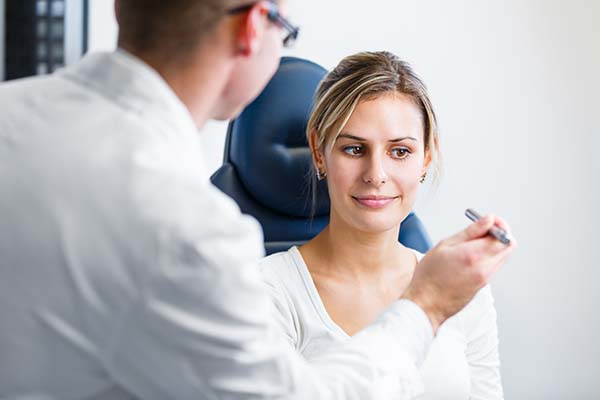
You do not need to have glasses to visit the eye doctor. In fact, optometrists offer a variety of services in addition to vision correction, such as early detection and treatment of eye disease. Whether you are experiencing vision problems or not, it is recommended to visit the eye doctor regularly to prevent issues from developing. Even receiving an eye exam at least once every 1-2 years can ensure patients' vision remains healthy.
Why see an eye doctor?
Eye exams
Eye exams are among the most common services provided by eye doctors. Similar to how a person would visit their primary care physician for a general health checkup, a routine eye exam helps ensure the eyes' overall health. These exams are available to patients whether or not they have or need glasses.
During an eye exam, the eye doctor will conduct quick tests to check eye pressure and vision. This involves using blue light and a vision chart, respectively. They may also dilate the pupils with eye drops to look for signs of eye disease and conditions. Dilating the pupils allows the optometrist to see a greater portion of the back of the eye, also known as the "retina."
Patients with glasses should have an eye exam annually to ensure their prescription is up to date. Those without glasses should receive eye exams every one to two years for preventive care. It is best to treat eye diseases or vision problems early on to prevent them from progressing.
Prescription glasses
Patients who wear glasses or think they may need glasses can get them from the optometrist. As mentioned, if the patient does not have a current prescription, then the eye doctor can create one during an eye exam and vision test. Most eye doctors have an abundant stock of various styles to choose from, as well as opticians to assist with selecting a pair of glasses that fits the patient’s needs, face shape, and desired look.
Contact lens exams
Eye doctors can also provide contact lens exams for patients who prefer not to wear glasses but still need vision correction. Creating prescription contact lenses requires completing a few additional steps. An eye doctor can complete these steps in a contact lens exam, which can follow the end of a routine eye exam. The goal is to ensure the patient is a good candidate for contacts, meaning their eyes create enough natural lubrication. Further, the eye doctor will also fit them for contacts.
Laser eye surgery for vision correction
An eye doctor may also recommend laser eye surgery to correct vision problems, such as nearsightedness (myopia) or farsightedness (hyperopia). These surgeries allow a patient to obtain clear vision without needing to wear glasses or contacts. Check out the different types of laser-assisted procedures below:
- Laser-in situ keratomileusis (LASIK): In this procedure, the eye doctor uses a laser to reshape the inner corneal tissue.
- Laser sub-epithelial keratomileusis (LASEK): With this procedure, the eye doctor uses a laser to focus on reshaping the outer corneal layers.
- Photorefractive keratectomy (PRK): This procedure involves using a laser to reshape and flatten the corneal surface.
Detection of eye disease
The potential for eye disease is why it is important, even for patients who do not wear glasses, to get routine eye exams. With early detection, patients can slow down or avoid vision changes due to eye-related diseases. Once these vision changes occur, they will not go away on their own and will require medical treatment, such as vision-saving surgeries.
During an eye exam, the doctor will conduct various tests to look for serious eye diseases, such as the following:
- Glaucoma: A disease in which high inner eye pressure and fluid buildup cause damage to the eye. Irreversible vision loss can occur.
- Macular degeneration: This eye disease damages one’s central vision, either because the retina has deteriorated or leaky blood vessels have grown underneath it.
- Diabetic retinopathy: Patients may develop diabetic retinopathy as a complication of diabetes. With this eye disease, the blood vessels in one’s retinal tissue become damaged and cause floaters, blurred vision, and vision loss.
- Cataracts: This eye disease causes the lenses of the eyes to become clouded rather than clear, resulting in blurred vision.
Visit an optometrist for a checkup
Whether you need glasses, contacts, laser eye surgery, or an eye health checkup, we can help. Simply call our Dallas office if you would like to learn more about these common services provided by an eye doctor. We can also discuss our other services.
Request an appointment here: https://www.texasoptical.net or call Texas Optical at (214) 771-7333 for an appointment in our Dallas office.
Check out what others are saying about our services on Yelp: Eye Doctor in Dallas, TX.
Recent Posts
Glaucoma treatment can help protect vision, especially when started early. Glaucoma is a group of eye conditions that can damage the optic nerve, which carries visual information from the eye to the brain. Early glaucoma often develops without obvious symptoms; therefore, partnering with an optometrist through regular screenings can help detect changes before vision loss…
Protecting vision in hazardous environments requires the use of specialized safety glasses to prevent injuries from flying debris, chemicals, or intense light. We offer a range of protective eyewear to ensure patients in Dallas maintain clear, safe vision across various environments. Whether working on a construction site or engaging in home improvement projects, selecting the…
Progressive lenses make it possible to see clearly at multiple distances without switching between pairs of glasses throughout the day. These lenses combine distance, intermediate, and near vision correction into one smooth design. An optometrist may recommend them when a patient needs glasses for reading, computer work, and driving all at the same time. Learning…
Seeking professional red eye treatment addresses the root cause of ocular irritation rather than merely masking symptoms with temporary, over-the-counter (OTC) solutions. While many people view a bloodshot appearance as a minor nuisance, redness in the eyes is often a primary signal of underlying health concerns. These issues range from simple environmental allergies to more…