Can a Routine Eye Exam Detect Astigmatism?
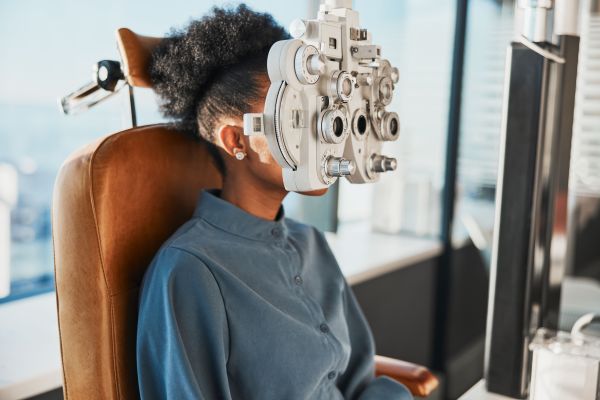
A professional eye exam is the most direct way for you to find out if astigmatism is causing blurry or distorted vision. While many people think of these visits as a way to get a new corrective lens prescription, a comprehensive check-up looks much deeper. At our Dallas office, we focus on providing clear answers and effective solutions so you can see the world without constant squinting or strain.
Astigmatism: how it affects vision
Astigmatism occurs when the cornea or lens has an irregular curve. In a typical eye, these structures are spherical, like basketballs. This symmetry allows light to enter the eye and bend evenly, focusing on a single point on the retina at the back of the eye. However, when astigmatism is present, the eye is shaped more like a football, with one curve being steeper than the other. This distortion causes light to scatter across multiple focal points, resulting in blurry or stretched vision at any distance.
It is important to note that astigmatism is not a disease. Rather, it is a structural deviation that can affect people of any age. It is usually hereditary, though it can also develop after an eye injury or surgery. Because the human brain is adept at adjusting to these changes, many patients do not realize their vision is compromised. For example, they may feel that their eyes are tired after a long day of work, unaware that their internal eye muscles are straining to find a clear focal point.
When to seek professional evaluation for astigmatism
Astigmatism can go undetected for a long time without any obvious symptoms. However, the condition can worsen over time, especially if left unaddressed. Common signs that suggest it is time for a professional evaluation include:
- Blurred vision when looking at near or far pnkects
- Frequent headaches that worsen by the end of the day
- Severe eye strain or a heavy feeling in the eyelids
- Difficulty seeing clearly while driving at night
- A constant need to squint to focus on images
- Seeing halos or streaks of light around streetlamps and headlights
A professional eye exam is the only way to confirm these symptoms are related to the shape of the cornea.
How an optometrist uses an eye exam to diagnose astigmatism
Detecting this condition requires more than reading letters off a wall chart. Rather, an optometrist uses specialized tools to measure how light reflects off the surface of the eye. Here are some common tests that the doctor may use to detect astigmatism during an eye exam.
Visual acuity test
The eye exam begins with a visual acuity test. This portion of the test determines how well a patient can identify symbols on a standardized chart from a specific distance. While this part of the exam provides a baseline for visual performance, it does not explain the cause of the blurriness.
Refraction test
To find the specific cause of astigmatism, the optometrist will need to perform a refraction test. During a refraction assessment, the patient will look through a device called a phoropter, which contains a variety of different lenses. By comparing how various lens combinations affect the clarity of an image, the optometrist can pinpoint the exact prescription lens power needed to correct the astigmatism. This portion of the exam is necessary to identify the axis. The axis is the specific angle where the corneal curvature tends to be the most irregular.
Corneal topography
Another high-tech tool is corneal topography. This part of the eye exam creates a detailed map of the eye surface, much like a mountain map shows different elevations. It reveals the pinpoint location where the curves are uneven. This level of detail ensures that we tailor any corrective lenses or treatments to the patient's specific needs.
Treatment options for astigmatism
Once the optometrist identifies astigmatism during an eye exam, the path to better vision is usually very straightforward. At the end of the day, the goal of treating astigmatism is to improve vision clarity and comfort. The most common treatment is corrective lenses, such as eyeglasses or contact lenses. Prescription lenses counteract the uneven curves of the cornea or lens.
Regain vision clarity with an eye exam
Scheduling an eye exam is the first step toward ending the frustration of distorted vision. Whether you need contact lenses or prescription glasses, the team at Texas Optical is ready to help you see clearly. If you are tired of struggling with blurry vision or recurring headaches, call our Dallas office to book an eye exam today.
Request an appointment here: https://www.texasoptical.net or call Texas Optical at (214) 771-7333 for an appointment in our Dallas office.
Check out what others are saying about our services on Yelp: Eye Exam in Dallas, TX.
Recent Posts
Protecting vision in hazardous environments requires the use of specialized safety glasses to prevent injuries from flying debris, chemicals, or intense light. We offer a range of protective eyewear to ensure patients in Dallas maintain clear, safe vision across various environments. Whether working on a construction site or engaging in home improvement projects, selecting the…
Progressive lenses make it possible to see clearly at multiple distances without switching between pairs of glasses throughout the day. These lenses combine distance, intermediate, and near vision correction into one smooth design. An optometrist may recommend them when a patient needs glasses for reading, computer work, and driving all at the same time. Learning…
Seeking professional red eye treatment addresses the root cause of ocular irritation rather than merely masking symptoms with temporary, over-the-counter (OTC) solutions. While many people view a bloodshot appearance as a minor nuisance, redness in the eyes is often a primary signal of underlying health concerns. These issues range from simple environmental allergies to more…
Maintaining healthy eyes is an essential part of overall wellness. Therefore, scheduling regular optometry visits is an important step toward preserving clear, comfortable vision. These appointments do far more than determine whether a person needs glasses or contact lenses. They help assess both visual performance and the health of the internal and external eye structures.…