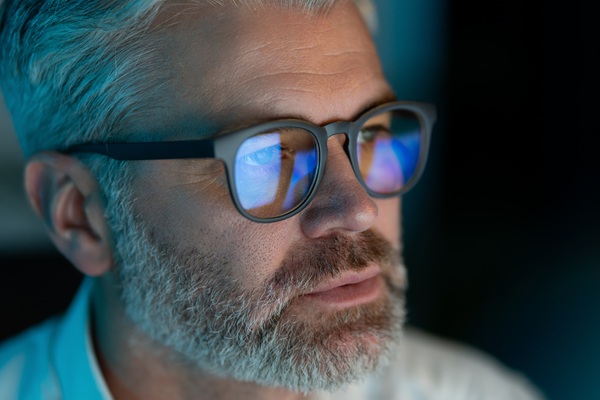
With digital screens occupying the majority of our lives, concerns about eye strain and potential long-term effects have increased the popularity of blue light glasses. Many individuals who spend extended hours in front of screens in their personal and professional lives seek practical solutions to alleviate symptoms associated with prolonged exposure to artificial lighting. Fortunately, blue light glasses filter or block blue light emitted by digital devices to reduce discomfort and improve overall vision health.
The effects of blue light
Blue light is a high-energy, short-wavelength light that is naturally emitted by the sun and artificially produced by screens, LED lighting, and fluorescent bulbs. While natural blue light is beneficial for regulating circadian rhythms and enhancing alertness, excessive artificial exposure from electronic devices may contribute to eye strain, disrupted sleep cycles, and potential retinal damage. Prolonged exposure to blue light from screens can also lead to symptoms such as dry eyes, headaches, and difficulty falling asleep. As everyday screen usage increases, the demand for protective measures continues to grow.
How blue light glasses work
Blue light glasses incorporate specialized lens coatings or materials designed to filter a portion of blue light before it reaches the eyes. There are two primary types of blue light lenses: filtering and blocking. Filtering lenses reduce blue light transmission, diminishing the amount that enters the eye. They often have a slight yellow tint that neutralizes blue light wavelengths. Blocking lenses completely obstruct blue light using an advanced coating or tinted material that prevents transmission. They typically appear with an orange or amber hue.
By wearing blue light glasses while using electronic devices, individuals may experience reduced eye strain, improved focus, and fewer sleep disturbances. While wearing these glasses does not fully eliminate blue light exposure, they can help manage its potential negative effects on a person's eyes and overall well-being.
The benefits of using blue light glasses
There are several benefits of using blue light glasses, particularly for those looking at screens for prolonged periods of time for work and school. Some of these benefits include:
Reducing digital eye strain
Symptoms such as dryness, irritation, and fatigue are common among individuals who spend a lot of time on computers, tablets, or smartphones. Blue light glasses can help alleviate this discomfort by filtering excessive light exposure.
Improved sleep quality
Artificial blue light exposure in the evening can interfere with melatonin production, making it difficult to fall asleep. Wearing blue light glasses in the hours leading up to bedtime may support healthier sleep patterns. It can also complement the positive effects of dark mode settings on electronic devices.
Protect visual health
These glasses can improve comfort during extended screen sessions by minimizing glare and optimizing contrast. They can also protect the eyes against possible retina damage. While research is ongoing, some researchers believe that reducing blue light exposure could contribute to long-term eye health.
When to consider wearing blue light glasses
Individuals experiencing frequent eye strain, difficulty sleeping after screen use, or prolonged exposure to artificial lighting may benefit from using blue light glasses. These lenses are particularly useful for professionals working in front of computers for extended hours. Examples may include students who are engaged in digital learning and individuals who frequently use mobile devices or work in office environments and look at screens most of their workday.
An optometrist can provide recommendations based on each patient's unique vision and health needs. A comprehensive eye examination may help determine whether blue light glasses are a suitable option. If they are not, the optometrist may recommend alternative vision solutions, such as prescription lenses with blue light filters built into the lenses.
Additional tips for reducing blue light exposure
While blue light glasses offer a practical solution, other methods can also contribute to healthier screen habits. Here are some practical tips to incorporate:
- Follow the 20-20-20 rule: Taking a 20-second break every 20 minutes to look at something 20 feet away can help reduce eye strain.
- Adjust screen settings: Many digital devices include blue light reduction modes, such as "Night Shift" or "Dark Mode," which limit blue light emission during evening hours.
- Use proper lighting: Reducing overhead fluorescent lighting and increasing ambient lighting can minimize glare and enhance visual comfort.
- Maintain a healthy blink rate: Conscious blinking helps prevent dry eyes by hydrating the ocular surface and reducing strain.
Call us to learn more
As the regular use of electronic devices continues, it is important for you to prioritize your eye health and prevent damage. Blue light glasses are a valuable tool for mitigating the effects of prolonged screen exposure. Are you ready to learn more? Call our Dallas office to schedule an appointment.
Request an appointment here: https://www.texasoptical.net or call Texas Optical at (214) 771-7333 for an appointment in our Dallas office.
Check out what others are saying about our services on Yelp: Read our Yelp reviews.
Recent Posts
A contact lens exam addresses different questions than a standard eye exam. It evaluates the cornea, lids, and tear film, then matches lens materials and designs to vision needs and eye health. Lenses sit directly on the eye, so small details such as curvature, diameter, and oxygen flow influence comfort, clarity, and safety. An optometrist…
Standard vision tests, or eye exams, help ensure accurate prescriptions for glasses and support long-term eye health for people who wear corrective lenses. Even small prescription changes can affect headaches, screen comfort, and night driving clarity. Eye exams also screen for conditions that may not present with early symptoms, making routine testing an important habit.…
Pediatric eye care is the key to clear vision and confident learning that starts in childhood. Unfortunately, even minor vision problems can negatively affect reading, coordination, and classroom focus. Many parents come to realize how common it is for children to pass quick screenings yet struggle with focusing, eye strain, or fatigue during schoolwork. A…
The selection of eyewear feels significantly easier when the styles and craftsmanship of Versace eyewear enters the conversation, since bold lines and iconic detailing create an instantly recognizable look. Versace represents the intersection of Italian fashion and Greek mythos, blending confident glamour with symbolism through its signature Medusa logo. The brand is widely associated with…